
Vertigo Specialist in Dubai – Dizziness & Balance Assessment
If you are experiencing vertigo, dizziness or balance problems, Dr. Nanor Tchaghlasian provides specialist vertigo and balance assessment in Dubai to help identify the underlying cause.
Dizziness and vertigo may have many causes, including BPPV (benign paroxysmal positional vertigo), vestibular neuritis, vestibular migraine, Ménière’s disease and other inner-ear disorders. A detailed medical history and specialized vestibular examination can help determine the possible cause and whether further vestibular testing is required.
How Does Our Balance System Work?
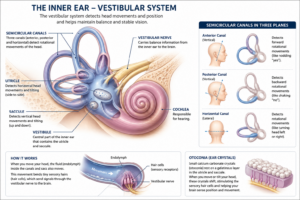
Maintaining balance depends mainly on information received by the brain from three systems:
- The vestibular system of the inner ear, which detects head movement and position.
- Vision, which provides information about our surroundings and orientation.
- The sensory system, particularly information from the muscles, joints and feet about body position.
The brain continuously combines information from these systems to maintain balance and stable vision while we move.
A disturbance in one or more of these systems may result in vertigo, dizziness, imbalance or unsteadiness.
When Should You Have a Vestibular Assessment (balance tests) ?
A vestibular assessment may be recommended if you experience:
- Spinning vertigo
- Recurrent or persistent dizziness
- Dizziness triggered by turning in bed, lying down or looking up
- Imbalance or unsteadiness while walking
- Dizziness triggered by rapid head movements
- Recurrent unexplained falls
- Persistent dizziness following an acute attack of vertigo
- Dizziness associated with hearing loss, tinnitus or pressure in the ear
- Difficulty maintaining balance in darkness or on uneven surfaces
And If you have plus to the dizziness any of the following other symptoms, be sure to seek emergency medical care:
- Chest pains

- Numbness or tingling
- Falling or problems walking
- Weakness in the legs or arms
- Blurred vision
- Slurred speech
- Sudden hearing loss
- Severe neck stiffness
- Head trauma or injury
- High fever
Why do you need balance tests?
Balance tests determine:
- What is the cause of the problem?
- Where in the balance system is the problem?
- What are the changes that happened in the balance system? Are they temporary or permanent?
This information will help the doctor to find the diagnosis and to choose the proper management plan.
What are the balance tests?
Bedside balance tests: They are mainly done by observing your eyes in different head and body positions. The most important finding which the doctor will be looking for is nystagmus (special kind of involuntary eye movements which helps the doctor to differentiate between different causes of vertigo or dizziness).
Sometimes bedside balance tests will not be enough , so more detailed vestibular tests are needed
These may include:
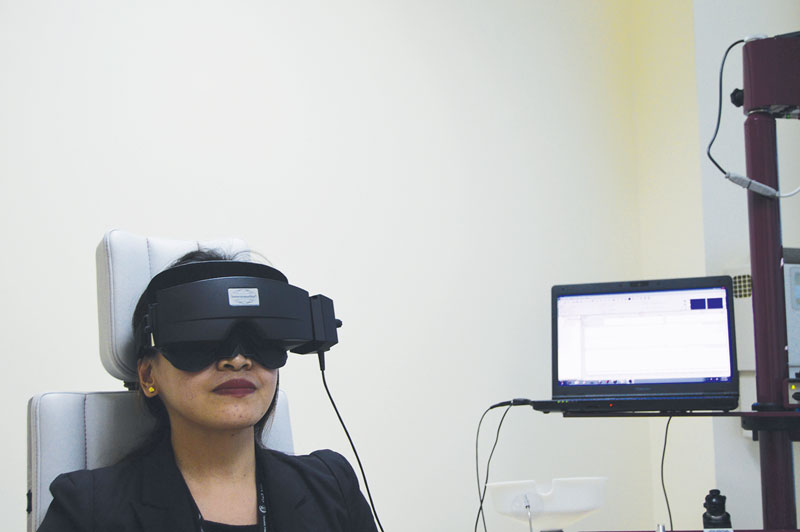
Videonystagmography (VNG)
VNG is done with a google fixed firmly over your eyes, tracking and recording your eye movements with camera as you look back and forth between designated points or move your head and body into different positions.
Video Head Impulse Test (vHIT)
vHIT evaluates the function of the semicircular canals and the vestibulo-ocular reflex during rapid head movements.
VEMP Testing
Cervical and ocular Vestibular Evoked Myogenic Potentials (cVEMP and oVEMP) may be used to assess specific parts of the inner-ear balance system and vestibular pathways and done by putting electrodes on the neck , around the eyes and recording muscles activity as response to loud sounds.
Not every patient requires every test. The appropriate investigations are selected according to the symptoms and clinical findings.
Common diseases causing vertigo or dizziness
1.BPPV
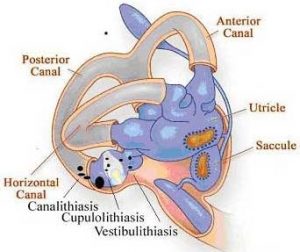
The most common cause of vertigo seen in ENT clinics is benign paroxysmal positional vertigo, or BPPV. Spinning vertigo lasts for seconds to minutes. It is not constant might occur whenever tipping the head up or down, lying down, or turning over or sitting up in bed. Sometimes the vertigo will be severe and will accompany with nausea and vomiting. The patient doesn’t experience any hearing loss or ear pressure or ringing sounds in the ear.
Why BPPV Happens?
The ear has small crystals called “otoconia” which is normally located in the utricle. For some reason these crystals will come loose and dislodged from its place and will fall in one of the semicircular canals moving freely in the fluid with special head positions causing spinning sensation (vertigo) whenever the head is in that position.
How is BPPV Diagnosed?
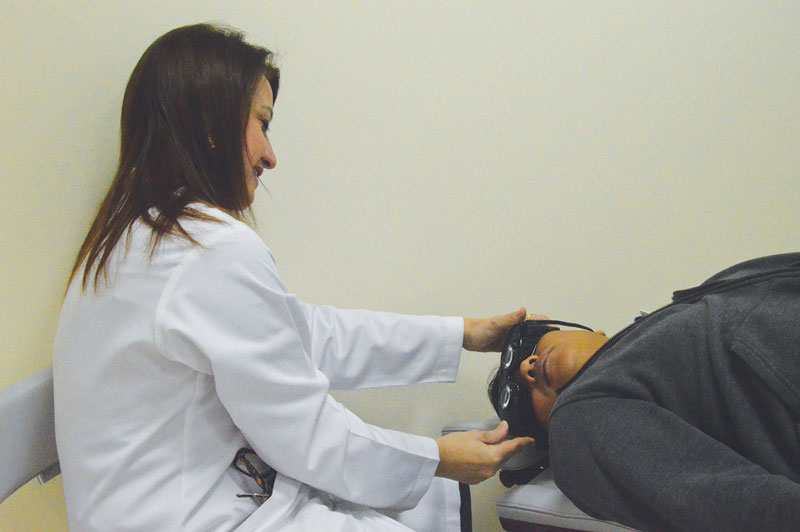
The diagnosis is based on history and findings on physical examination. The doctor might do several bedside balance tests which are mainly done by observing your eyes in different head and body positions. The most important finding which the doctor will be looking for is nystagmus (special kind of involuntary eye movements which helps the doctor to differentiate different causes of vertigo or dizziness. It is important for the doctor to decide which ear is affected and which canal is affected to choose the proper repositioning maneuver for treatment.
These tests can be done without recording or with recording with VNG.
How is BPPV treated?
BPPV is easily treated in the office by repositioning maneuvers. The aim of these maneuvers is to make the crystals fall back into its place by putting the head in different positions. Each canal involvement has specific maneuver( Eupley, Semont, Barbeque maneuvers and esc…) The doctor has to decide according to your exam result which ear and which canal has to be treated.
2. Meniere’s disease
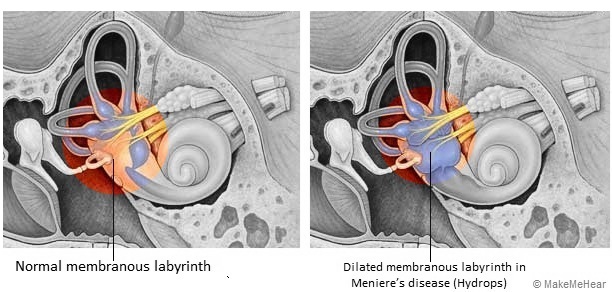
One of inner ear disorders which presents as recurrent attacks of spontaneous vertigo that last for minutes to hours accompanied by sensation of pressure or fullness in the ear and ringing in the ear. This can cause intermittent hearing loss only when having the attacks or gradual worsening of hearing or sudden hearing loss which is permanent.
An acute attack of Meniere’s disease is generally believed to result from increasing pressure of the fluid within the inner ear. This is called “hydrops”. One way for this to happen is when the drainage system, called the endolymphatic duct or sac is blocked or too much fluid secreted by the stria vascularis. In some cases, the endolymphatic duct may be obstructed by scar tissue, or may be narrow from birth.
It is diagnosed by hearing and balance tests.
At the present time there is no cure for Meniere’s disease, but there are ways to manage the condition and to control the symptoms.
Self-Care and Home Treatment
- Diet and change of life style
Changing your diet may help to reduce the amount of fluid in the inner ear and ease symptoms. Items to limit or exclude from your diet include:
- salt
- caffeine
- chocolate
- alcohol
- monosodium glutamate (MSG)

It’s also important to drink six to eight glasses of water per day, so your body isn’t retaining fluid. Other lifestyle remedies include:
- resting during vertigo attacks
- eating regularly (to help regulate fluids in your body)
- managing anxiety and stress through psychotherapy or medication
It’s also important to quit smoking; nicotine can make the symptoms of Meniere’s disease worse.
Even though there’s no cure for Meniere’s disease, there are strategies you might want to consider to reduce your symptoms. Talk to your doctor about treatments that can help you cope with Meniere’s disease which may be.
- Medication
- Intratympanic injections
- Surgical treatment
3. Acoustic Neuroma 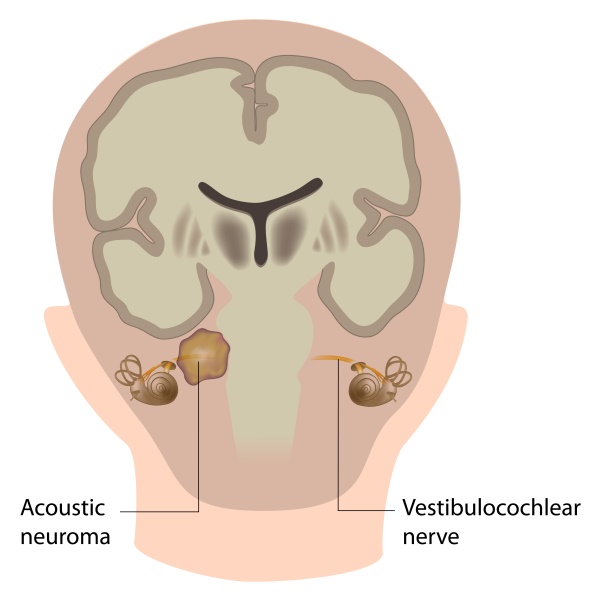
Benign slow growing mass that occasionally occurs on the hearing and balance nerve. It presents with hearing loss and tinnitus (sounds in the ear) in one side. Any patient with an unexplained progressive hearing loss and ringing sound only in one ear should get a MRI to rule out the tumor. Most commonly, an acoustic tumor is treated with surgery or radiation to prevent complications caused with ongoing tumor growth.
4. Vestibular Neuritis VN
Vestibular neuritis is a disorder that affects the balance nerve which is called vestibular nerve. This nerve transfers body and head position information from the inner ear to the brain. When this nerve becomes swollen (inflamed), it will cause vertigo and imbalance.
The most likely cause for inflammation as recent researches is viral infection of the nerve.
What are the Symptoms?
- Constant Vertigo that develops over seconds , minutes , hours and lasts more than 24 hours
- nausea and vomiting ,
- head motion intolerance
How is VN Diagnosed?
The diagnosis is based on history and findings on physical examination. The doctor might do several bedside balance tests which are mainly done by observing your eyes in different head and body positions. The most important finding which the doctor will be looking for is nystagmus (special kind of involuntary eye movements which helps the doctor to differentiate between different causes of vertigo or dizziness.
These tests can be done without recording or with recording.
How is VN treated?
In acute stage of the disease the aim of the treatment will be to reduce acute symptoms (vertigo, nausea, vomiting) and If these symptoms are severe and not able to be controlled by oral medication patients may be admitted to the hospital for IV medication and fluids to prevent dehydration.
We do not recommend long-term usage of central vestibular suppressants because they may make recovery more difficult by preventing brain compensation.
If balance and dizziness problems last longer than a few weeks, a vestibular physical therapy (vestibular rehabilitation program) may be recommended. The goal of this program is to help the brain to compensate and adapt the body to the changes which happened in balance system.
Can vestibular neuritis recur?
In most patients (95% and greater) vestibular neuritis is a one-time experience. Most patients fully recover.
